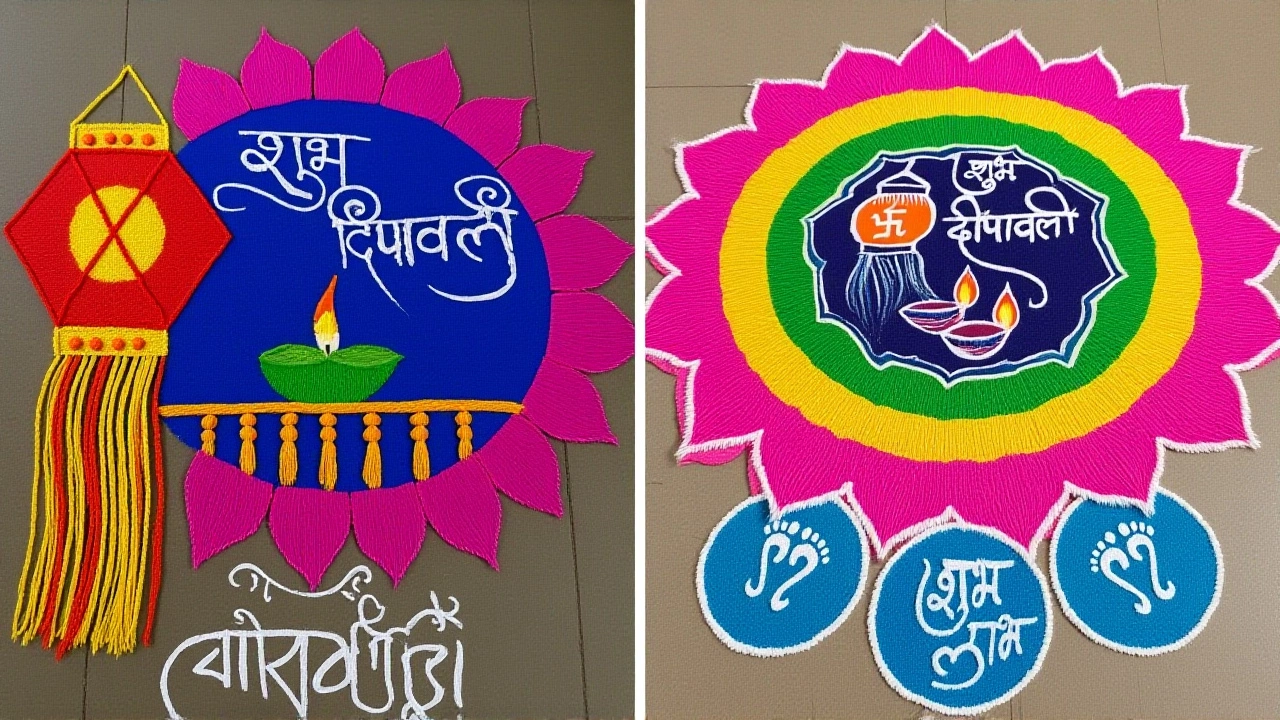
Diwali 2025 sparks fresh rangoli trends, from five design categories and eco‑friendly kits to AI‑generated patterns, guiding families worldwide.
Rangoli, a centuries-old Indian art form where intricate patterns are drawn on the ground using natural materials like rice flour, colored powders, or flower petals. Also known as Kolam in Tamil Nadu, Muggu in Andhra Pradesh, or Chowk Purana in North India, this practice isn't just decoration—it's a spiritual and cultural tradition. Every Diwali, families spend hours creating these designs to welcome prosperity and ward off negativity. But Rangoli is more than just festival art. It's a living tradition passed down through generations, with each region adding its own unique style. From the simple lines of South Indian Kolam to the vibrant, detailed patterns of Maharashtra, Rangoli reflects India's diverse cultural heritage.
Let's talk history. Some believe Rangoli dates back over 5,000 years, with evidence found in ancient Indian texts and cave paintings. The practice was originally a way to mark sacred spaces for rituals and ceremonies. Over time, it evolved into a daily or seasonal art form, especially during festivals like Diwali, Pongal, and Onam. In rural villages, women would create Rangoli outside their homes every morning, using rice flour to feed birds and insects—a small act of kindness that also kept the practice eco-friendly. Today, this tradition continues, blending ancient customs with modern creativity.
Regional variations make Rangoli fascinating. In South India, Kolam designs are typically drawn using white rice paste in intricate geometric patterns, often starting from a dot and expanding outward. In Maharashtra, Rangoli uses bright colors and complex motifs like peacocks, flowers, and deities. In Gujarat, they're called "Rangoli" too, but often feature symmetrical patterns made with colored sand. In West Bengal, during Durga Puja, Rangoli is called "Alpana" and uses rice paste with floral motifs. Each style has its own rules and meanings, but all share the common goal of bringing beauty and positivity to the home.
Creating Rangoli is easier than you might think. Start with a simple design: draw a grid of dots, then connect them with curves or straight lines. Use rice flour or colored powders to fill in the patterns. For beginners, stencils or templates can help. The key is to keep it symmetrical and balanced. Many people use a small funnel or their fingers to sprinkle the powder. The process is meditative—focusing on the design helps clear the mind. It's a great way to involve kids too; they can help with simple shapes or colors.
Why is Rangoli so important? Beyond aesthetics, it holds deep spiritual meaning. The patterns are believed to attract positive energy and repel negative forces. The use of rice flour symbolizes sharing and compassion—feeding small creatures while creating beauty. During Diwali, Rangoli is part of the "Lakshmi Puja," where the goddess of wealth is welcomed into homes. In some communities, the design's symmetry represents the universe's harmony. This philosophy makes Rangoli not just art, but a spiritual practice.
Modern takes on Rangoli are everywhere. Artists now use chalk on pavements for public art projects, or create digital Rangoli for social media. Some incorporate LED lights for nighttime displays. Urban apartments might use smaller, portable versions on tables. Competitions are held worldwide, with categories for traditional and contemporary styles. Even fashion designers draw inspiration from Rangoli patterns in clothing and jewelry. These innovations keep the tradition alive while making it relevant for today's world.
Want to try making your own Rangoli? Start small. Use colored sand or chalk on a driveway. Focus on a simple design like a flower or star. The goal isn't perfection—it's the joy of creation. Remember, Rangoli is temporary; it fades with rain or foot traffic. That impermanence is part of its beauty, teaching us to appreciate the present moment. Whether you're a beginner or an expert, Rangoli offers a creative outlet that connects you to centuries of tradition.
Below, you'll find real stories and tips about Rangoli—from how families preserve this art in modern times to innovative ways people are keeping the tradition alive. Whether you're curious about the history or ready to create your own design, there's something here for everyone.
Diwali 2025 sparks fresh rangoli trends, from five design categories and eco‑friendly kits to AI‑generated patterns, guiding families worldwide.